
Microcement, Applied In-House
One continuous surface — floor, wall, worktop or bath — with no joints, no grout and nowhere for time to collect.
Redefining Luxury. Crafting Lifestyles.
What microcement is (and why designers love it)
Microcement is a cement-and-polymer coating applied by hand at just a few millimetres thick, then sealed into a continuous, waterproof, stone-like surface. It bonds to almost anything — screed, timber, plasterboard, even existing tiles — which means seamless floors and walls without ripping a house apart to get them.
The look is calm and monolithic: one material running uninterrupted across a floor, up a wall, over a vanity. No grout lines dividing the surface, no thresholds breaking the sweep of a room. It’s the finish behind most of the bathrooms and floors you’ll have saved from our Instagram — and it’s applied exclusively by our own in-house team, because microcement rewards skill and punishes shortcuts.

Redefining Luxury. Crafting Lifestyles.
Where we use it
Bathrooms & wetrooms
Our signature application: fully tanked, fully sealed wetrooms where floor, walls and even the bath surround are one continuous waterproof surface. Warm underfoot, effortless to keep clean, and utterly without grout.
Floors
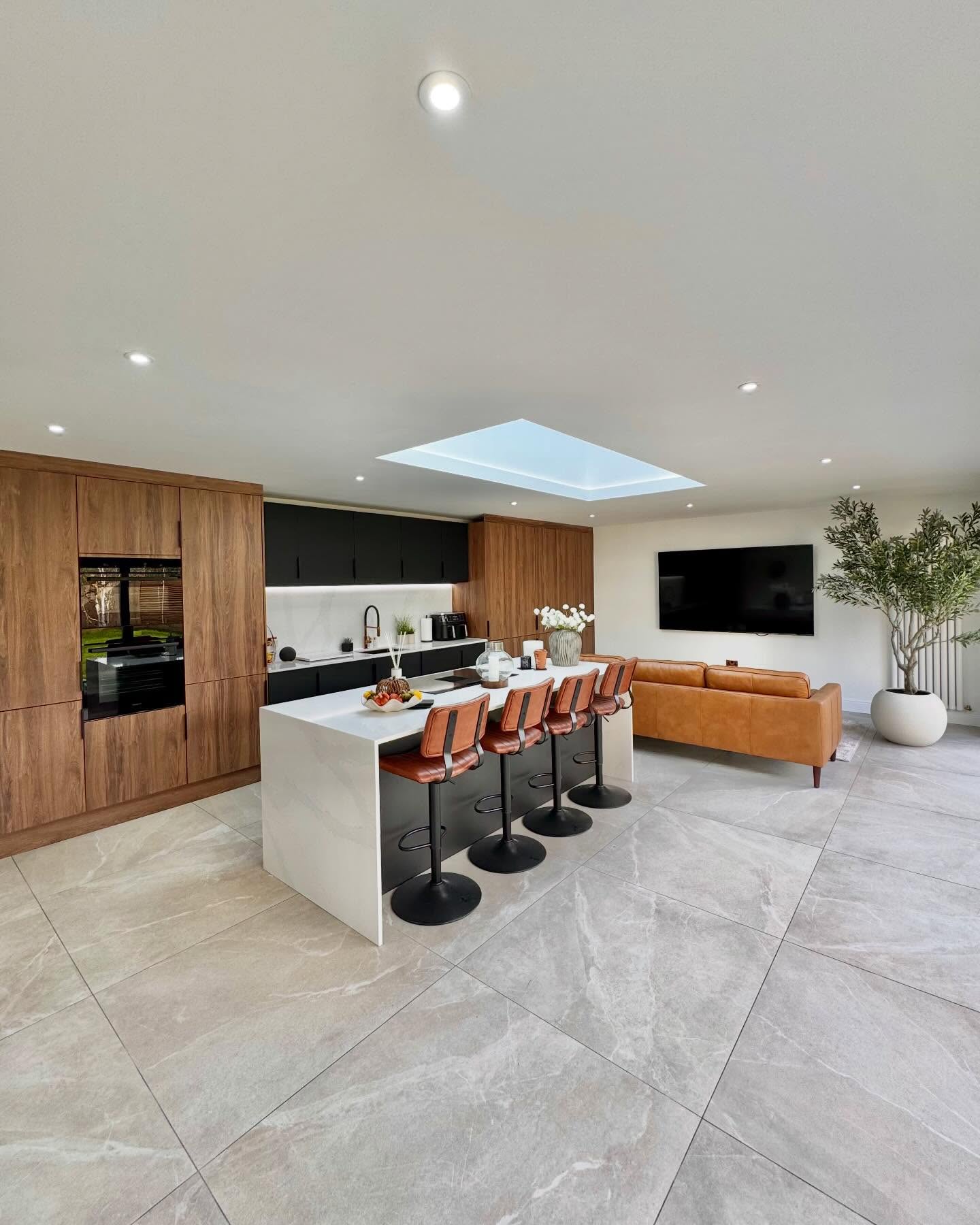
Seamless microcement floors across kitchens, hallways and open-plan living — over underfloor heating, without expansion joints cutting the space into tiles-by-another-name. Ideal over existing floors where height build-up must stay minimal.
Worktops, vanities & furniture
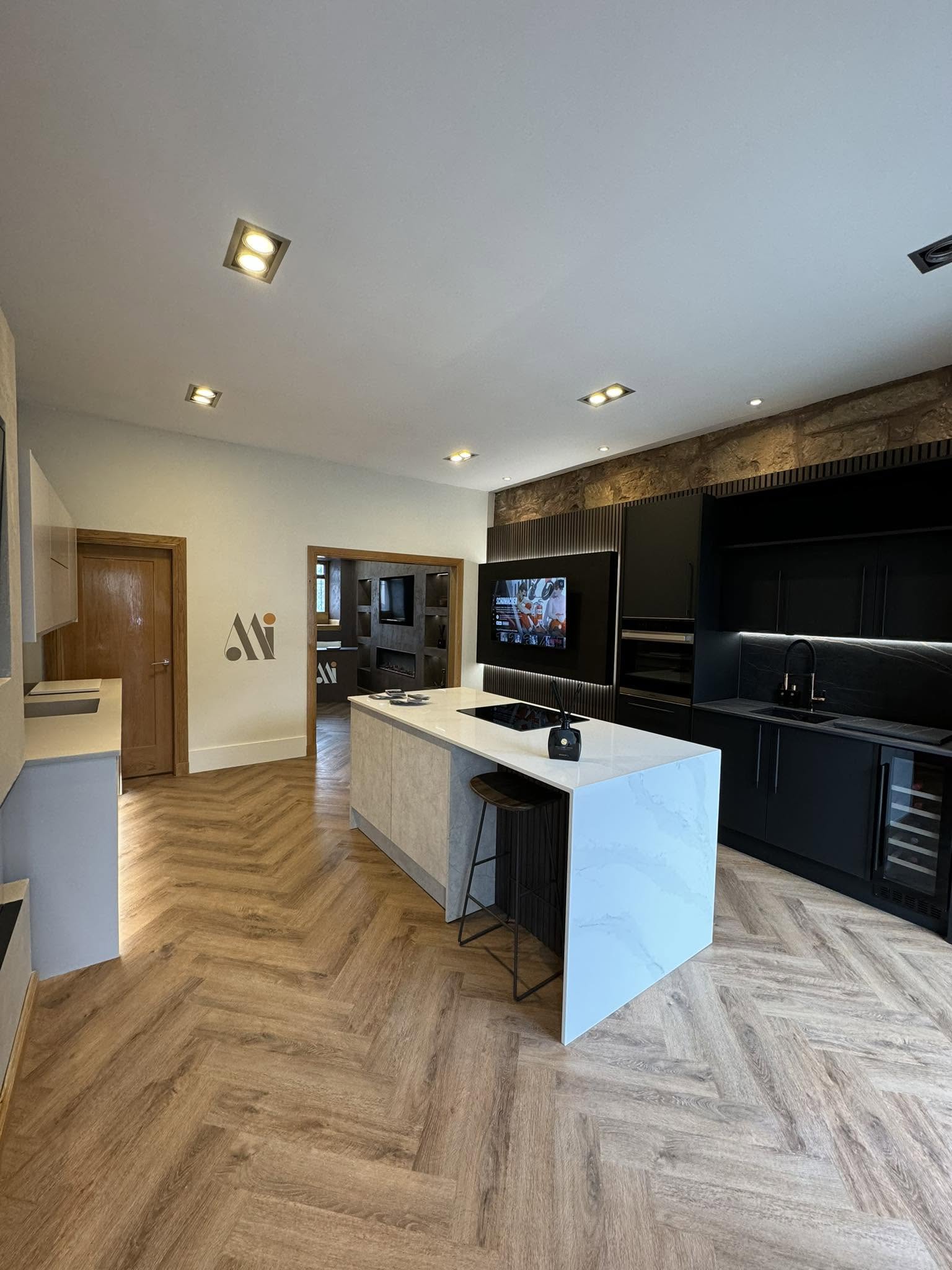
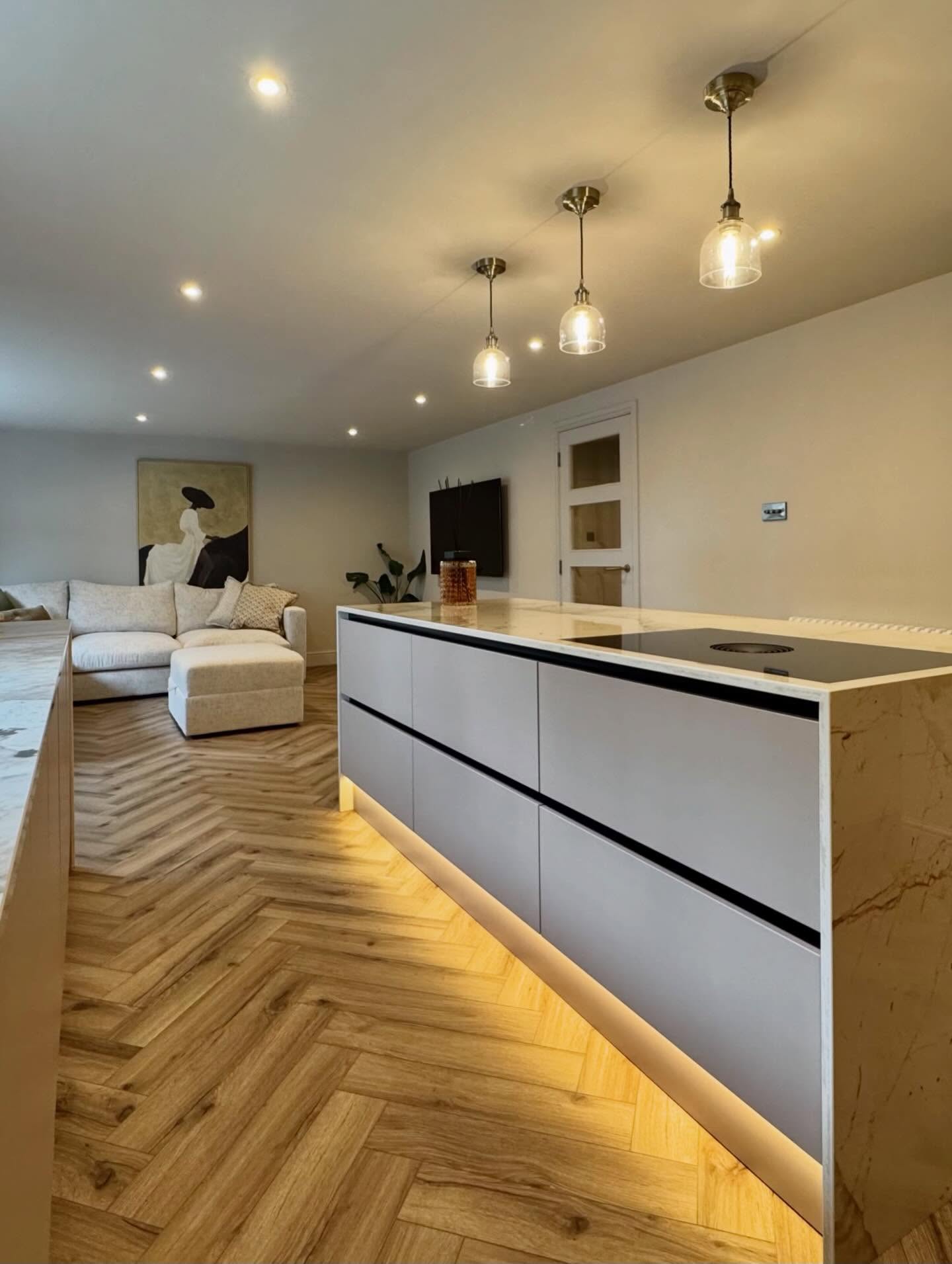
Kitchen islands, breakfast bars, vanity tops and built-in benches wrapped in microcement — the monolithic look of cast concrete at a fraction of the weight and thickness.
Feature walls & stairs
Staircases, chimney breasts and wall runs where the material’s soft, clouded movement does the decorating on its own.
Colours & textures
A neutral library from warm bone through greige to near-black, in matt, satin and textured finishes — plus bespoke tints. Every quote includes sample boards made in your chosen colour and sheen, viewed in your light.
Honest answers about microcement
Microcement done properly is superb; done cheaply it hairline-cracks, stains and delaminates — which is why it has a mixed reputation in the hands of general trades. Preparation is most of the job: substrate assessment, priming, mesh reinforcement, multiple base and finish coats, then sealing matched to the room’s use. Our applicators do this daily, on our own projects, to a standard we have to stand behind for years. That’s the difference between a surface and a liability.

FAQs
How much does microcement cost?
By the square metre, varying with substrate preparation and the surface — floors differ from walls, and worktops differ again. As a guide, expect [£X–£X]/m² supplied and applied. [CLIENT TO CONFIRM.] We quote precisely after seeing the space or detailed photos.
Does microcement crack?
A properly prepared and reinforced application should not crack in normal use — the horror stories almost always trace back to preparation. Substrate movement is assessed before we agree to apply; if a floor isn’t suitable, we’ll tell you and propose an alternative.
Can it go over existing tiles?
Usually yes — that’s one of its best tricks. A sound, well-bonded tiled surface can be primed and coated, saving the mess and cost of ripping out, and keeping height build-up to a few millimetres.
Is it waterproof enough for a shower?
Yes — as a system: tanking beneath, correct membranes and a wet-rated sealer over. This is precisely why wetroom microcement should never be a general builder’s first attempt.
How do I clean and maintain it?
Neutral cleaner and a mop or soft cloth — no bleach, no abrasives. Sealed surfaces shrug off daily life; we’ll leave you a one-page care guide, and we’re a phone call away for re-sealing years down the line.